You can get just about any kind of design tattooed on your body; the only limitation is your imagination. You can find tattoo design ideas everywhere, clip art sources on the WWW or in books, art books, comic books, yours your children's drawings, tattoo magazines, etc. Tattoo designs fall basically into two categories: 1. Flash and 2. Custom.
Flash designs are the tattoo designs typically seen covering the walls of tattoo studios. They are pre drawn designs that you choose and have tattooed on the spot. The tattoo artist can usually change the design slightly to make it more unique for you.
Custom designs are designs that are original one of a kind designs made in collaboration with your chosen artist. Usually a client will bring in some inspiration such as- a record cover, T-shirt, card, panting reproduction, etc. and explain to the artist what they would like to do with it such as- I want it on my shoulder, smaller than the original, and the colors to be different. The artist will then work on developing the drawing to the specifics of the client.
I do not tattoo names.
It is not advisable to get a tattoo while pregnant or nursing; though it is unlikely getting a tattoo will hurt the fetus or nursing infant. The problem will be in the quality of the tattoo. While pregnant the body is working overtime and the tattoo will possibly heal harder and possibly result in a light tattoo. Additionally, while pregnant many women put on extra weight that will come off after the pregnancy. The extra weight will cause the tattoo to be distorted once the weight is lost. While nursing a woman's body produces antibodies that are to be passed to the infant. If tattooed while these extra antibodies are in the system the tattoo may heal harder and possibly result in a light tattoo. If your desire is to get the best quality tattoo I suggest that you wait until the pregnancy and nursing are completed and then get the tattoo. If you decide to go ahead and get the tattoo while pregnant or nursing please consult your tattoo friendly physician first.
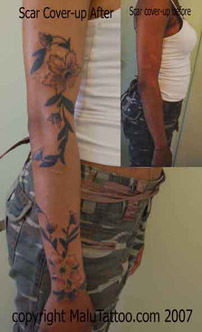
Yes, though there are a few things to consider when getting a tattoo over a scar. First, the scar must be at least 1 year old before you get the tattoo. This will give the scar enough time to have completely healed and regenerated before attempting to cover it. Second, to hide a scar it is better to have a busy pattern covering the scar than a solid color. For example, a wing design over a scar will hide the outline of the scar by detracting the eye from the scar. However, a solid tribal piece will let the scar show through and will not accomplish the goal to hide the scar. Finally, a scar may not take the ink as well as normal skin. You might need to come back for another session to get a solid fill over the scar. I do not guarantee scar cover-up tattoos, any necessary touch-ups will be at the client's expense. Here is an example of a tattoo scar cover-up.
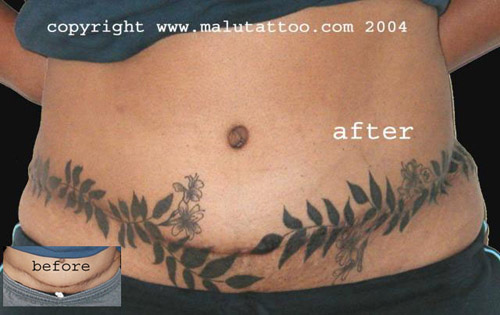
It is the same idea for a tattoo tummy tuck scar cover-up as it is for any scar cover-up (see above). The scar has to be at least 1 year old before you can get the tattoo. And a busy pattern is a better choice to distract the eye. Here is an example of a tattoo tummy tuck cover-up.
You must be at least 18 years old with valid identification to be tattooed at Malu Tattoo. We ID everyone and make a copy of your ID to attach to your consent form. No exceptions. We do not tattoo minors even with the consent and/ or presence of the parent or legal guardian. We are very strict about this rule for two reasons. First, a bill was passed in the California Senate called AB186 which makes the legal age 18 for all tattooing within the state of California. This bill does not provide for the parent or legal guardian to allow a minor child to be tattooed. Second, if your desire is to get the best quality tattoo it is not advisable to get tattooed while still growing. A well placed tattoo today my not be well placed once you stop growing. Your tattoos should be a positive experience. If your desire is to get the best tattoo possible, I recommend that you wait until you are 18 and use the time between to plan your tattoos.
The following is a list of suggestions to make your tattoo appointment more comfortable and enjoyable experience.
- Make sure to eat a few hours before your appointment. Some people get light headed or faint if they have NOT eaten before getting a tattoo.
- Make sure to drink plenty of water the day before and day of your application appointment.
- Give yourself enough time for your appointment plus some. Feeling rushed tends to add to the anxiety.
- Wear clothing that can easily be removed from the part of the body that is going to be tattooed. For example; you might want to wear sweat pants for a lower back tattoo.
- Wear clothing that you don't mind getting ink on. Tattoo ink tends to stain so don't wear anything that you don't want spoiled with ink.
- Do not drink alcoholic beverages or take blood-thinning medications as both will thin your blood and make you bleed more while getting your tattoo. Increased bleeding interferes with the tattooing process by possibly cause loss of ink.
- Bring a valid photo ID.
You will be asked to complete a Consent to be Tattooed form and to show a valid photo identification with your birth date on it (driver's license, passport, school ID, etc.) You will be asked to complete a health questionnaire, which is designed to determine if you are healthy enough to have a tattoo applied.
The artist makes a stencil of the design. Then she will clean and might shave your skin where the work will be done and, will swipe your skin with an "adhesive," which is usually deodorant stick . The artist will then put the stencil design directly on your skin and, when the paper is lifted a stencil line drawing of the design will appear on your skin. She will let you look in a mirror to make sure you are happy with the design and the placement. Once this is agreed upon, the artist will then begin setting up the tattooing work station. The artist will be doing things like dispensing various colors of ink into disposable ink caps, and putting a sterile needle tube set into the tattoo machine.
At this time, you will want to try to relax and take a bathroom break. You will probably be somewhat nervous, but excited at the same time. Your body is going through quite an adrenaline rush. Your excited condition and your anxiety about the anticipated pain may trigger a fainting spell. It will help if you are not there on an empty stomach. Eat about an hour or two BEFORE you go in for your tattoo session.
The artist will let you know that she is ready to start tattooing. The artist will start up the machine, dip the needle into the ink and let you know that she will start to work on the stenciled outline by starting on a small line that is not noticeable to let you know how it will feel. Don't forget to breathe and relax. The outline is usually the most painful part for most people. Remember that any move you make may cause the artist to make a mistake, so BEFORE you try to move, ask the artist first.
Most people can sit through over an hour of work, but if you get uncomfortable, just ask your artist if you can take a break. If you feel light headed or dizzy, tell your artist IMMEDIATELY so they can give you a break and get you some water. Once the tattoo is finished you will get to look at it, then it will be bandaged up and after-care will be discussed.
You will be sent home with written after- care instructions. Follow the
after-care instruction as closely as possible. Good after-care will make
the difference in how your tattoo heals and ultimately how it will look.
General:
It is very important to care for your new tattoo properly during the healing period. Never touch the tattoo or the area around the tattoo with dirty hands. Try to wear clean, loose fitting clothes that allow the tattoo to breath and does NOT rub on the tattoo. Do NOT swim or soak in any natural water source such as streams, rivers or ocean until your tattoo is healed. Do NOT expose a new tattoo to direct sunlight it will fade the color.
Specific:
Leave the bandage on for two (2) hours. Wash your hands before touching the tattoo.
Remove the bandage and wash your tattoo. The best place to wash your tattoo is in the shower.
Using your fingertips wash your tattoo thoroughly removing all surface
debris such as ink, plasma and blood. (Do NOT use a wash cloth on a healing tattoo; it is too
rough for the tender healing skin) Use a mild fragrance free soap such as glycerin soap.
When the tattooed skin feels like normal wet skin, pat dry with a fresh, clean paper towel.
Do not soak the tattoo while washing it. Apply a small amount of mild fragrance free lotion to your tattoo
whenever the tattoo feels dry. I recommend Curel Daily Moisture Therapy Lotion, Fragrance Free. Remember to
wash your hands before applying lotion. Rub the lotion
COMPLETELY into the tattoo; do NOT leave globs on the surface. Remember less is more.
Reapply lotion to your tattoo 3-4 times a day or when it feels dry. During the healing
process your tattoo will flake and peel. The lotion helps prevents drying and cracking
that can result in loss of ink. Continue to wash your tattoo daily and apply lotion
as needed until healed. Peeling skin is normal just do NOT pick or scratch it!
If your tattoo itches slap the skin around the tattoo to relieve itching. Healing time
varies, usually 1-3 weeks. If an infection occurs, contact your tattoo friendly physician.
While infections are unlikely, they do occur. It begins in a small area looking puffy and grayish.
Life time tattoo care:
Always use a sun screen or sun block on your tattoo. Direct sun will
eventually fade your tattoo. Consistent care and protection of your tattoo will keep
the lines sharp and colors bright!
On this site you will find: tattoo, tattoos, tattooing FAQ's, tattoo frequently asked questions, tattoo safety issues, Custom Tattoos, custom tattoos, Tatoo, tato, tatto, tattos, tattoos, body, body-art, women, malu, body-modification, tattoo cover-ups Los Angeles, California, April Love, tattooing, fine-art, tribal tattoo, color tattoo, Celtic tattoo, custom tattoo designs, tribal tattoo, cover-ups, tattoo art, healing, tat, tattoo artist, tattoo studio, skin, alternative art, tattoo photos, tattoo links, tribal tattoos, celtic tattoos.